


Cross Flow Filter
A cross flow filter is a type of filtration system widely used in industries that require efficient separation of solids from liquids. Unlike dead-end filtration, where all the liquid passes directly through the filter medium and solids accumulate on the surface, cross flow filtration allows the fluid to move tangentially across the filter surface. This design helps reduce fouling, maintain a stable filtration rate, and extend the operating life of the membrane or filter element.The basic principle of a cross flow filter is simple yet highly effective. The feed stream enters the system and flows parallel to the membrane or filter surface. A portion of the liquid, known as the permeate, passes through the membrane, while larger particles, suspended solids, and impurities are retained and carried away in the retentate or concentrate stream. Because the flow is tangential, it creates shear force along the membrane surface, which minimizes the buildup of particles and prevents rapid clogging. This makes cross flow filtration especially suitable for fluids containing fine particles, emulsions, proteins, cells, or other difficult-to-filter materials.Cross flow filters are used in many applications, including food and beverage processing, biotechnology, pharmaceuticals, wastewater treatment, chemical production, and industrial separation. In the food industry, they are often used for clarifying juices, wine, beer, and dairy products. In biotechnology and pharmaceutical processes, they play an important role in concentrating proteins, harvesting cells, and purifying valuable products. In water and wastewater treatment, cross flow systems can remove suspended solids, microorganisms, and other contaminants efficiently.One of the main advantages of cross flow filtration is its ability to handle challenging fluids without frequent shutdowns for cleaning. Since the particles are continuously swept away from the membrane surface, the system can operate for longer periods with better consistency. It also offers precise separation, high product recovery, and the flexibility to use different membrane pore sizes depending on the application. Another benefit is that many cross flow systems can be cleaned and reused, making them cost-effective over time.However, cross flow filtration also has some limitations. The system typically requires higher pumping energy than simple filtration methods because the fluid must be circulated continuously at sufficient velocity. The equipment can also be more complex and expensive to install. In some cases, membrane fouling still occurs and periodic cleaning is necessary to restore performance. Despite these challenges, the advantages often outweigh the disadvantages when high-quality separation is needed.Overall, a cross flow filter is an efficient and reliable solution for separating solids from liquids in a wide range of industries. Its tangential flow design, reduced fouling, and strong separation performance make it an essential technology in modern processing systems.
نتاج
تصنيف:
-
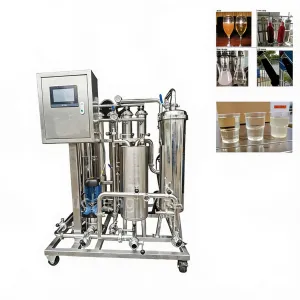
Stainless Steel Filter Machine for Rice Vinegar Soy Sauce Rice Wine
تصنيفها: Supporting Equipmentالمشاهدات: 320عدد:وقت الإصدار: 2026-07-16 16:18:08316 Stainless Steel Filter Machine for Rice Vinegar Soy Sauce Rice Wine This food-grade 316 stainless steel filter machine is specially designed for clarification filtration of rice vinegar, soy sauce, rice wine and other fermented liquid products. Constructed entirely from 316 stainless steel, it features excellent corrosion resistance against organic acids and salt content in sauces and fermented drinks. It efficiently removes suspended solids, fine residues and impurities to improve liquid clarity, stability and shelf life.The machine supports continuous filt...
أخبار
تصنيف:
لا توجد نتائج بحث!
حالة
تصنيف:
لا توجد نتائج بحث!
فيديو
تصنيف:
لا توجد نتائج بحث!
تحميل
تصنيف:
لا توجد نتائج بحث!
تجنيد
تصنيف:
لا توجد نتائج بحث!
المنتجات الموصى بها
لا توجد نتائج بحث!



 هاتف
هاتف